

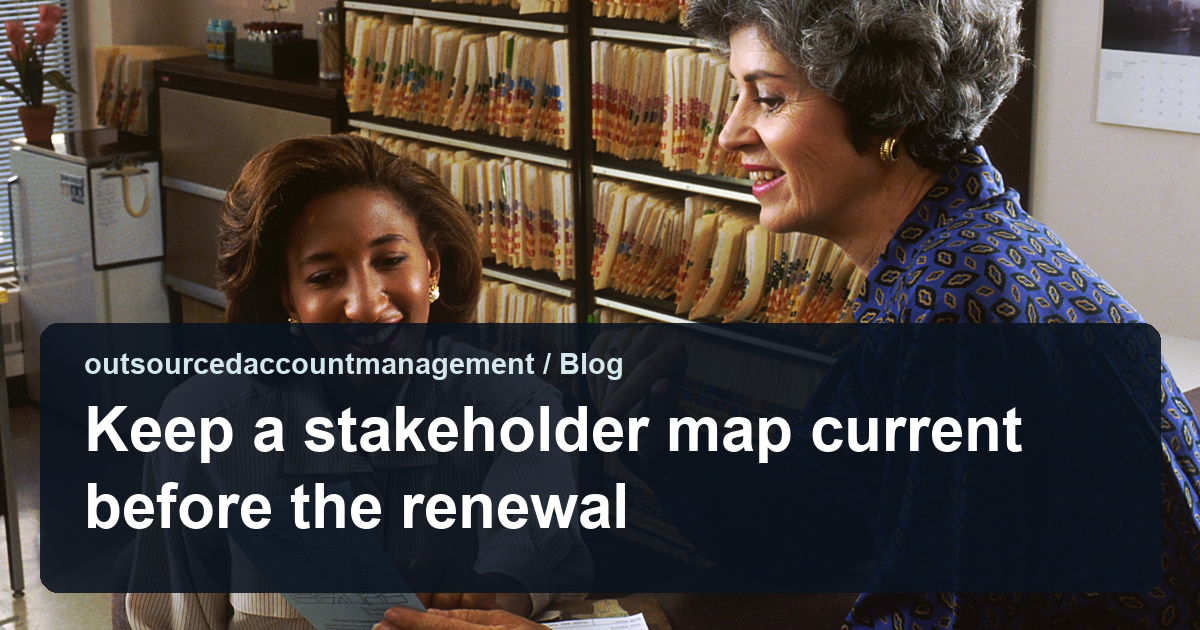
A stakeholder map that records the role, the influence, the last contact, and the renewal position.
How to approach: Keep a stakeholder map current before the renewal
A stakeholder map should show who can influence the renewal and who has been contacted. Start with the role, the influence, and the last contact. A map that only lists names is a directory. Keep the evidence with the record rather than in a separate log. The account lead should see the evidence before the client conversation.
Keep the map current before the renewal window. A map that is updated after the renewal is a history lesson. Keep the evidence with the record rather than in a separate log. Name the owner in the same line as the action. The QBR pack should link the claim to the source. The account lead should see the evidence before the client conversation.
Record the role and the influence
Record the stakeholder's role, the decisions they influence, and the preferred channel. A stakeholder who controls the budget is different from one who uses the service. Name the owner in the same line as the action. Keep the evidence with the record rather than in a separate log. The renewal brief should show the value and the risk. The QBR pack should link the claim to the source.
Record the relationship owner. A stakeholder without an owner will not be contacted. Name the owner in the same line as the action. A short note with four fields is easier to use than a long narrative. The account plan should distinguish a fact from a forecast. The QBR pack should link the claim to the source.
| Check | Action |
|---|---|
| Source | Verify the evidence |
| Owner | Name the decision maker |
Record the last contact and the position
Record the date and the topic of the last contact. Record the stakeholder's position on the renewal, if known. A position that is assumed is not evidence. Keep the boundary visible in the place where the work is assigned. The renewal brief should show the value and the risk. The account lead should see the evidence before the client conversation.
Record the next step and the date. A map without a next step is a report. Review the first few notes together before the process expands. Write the deadline as a date and a local time. The QBR pack should link the claim to the source. The renewal brief should show the value and the risk.
Review the map with the account lead
Review the map with the account lead before the renewal. Ask which relationship is weakest and what will change. Update the map. Ask whether a new reviewer could act on the record without a conversation. The QBR pack should link the claim to the source. The account plan should distinguish a fact from a forecast.
Keep the map with the account plan. A later review may need to see who was contacted. Record the date and the source so the next reviewer can repeat the check. Keep the original note beside the corrected version. The meeting note should keep the client's words.
“A record that cannot be reproduced is not a control.”
Editorial note
A short client handoff note
Use this as a starting point, then replace the bracketed date and match the wording to the client relationship. Send it only after the account owner checks the handoff map.
Open with the objective and the evidence.
Close with the owner and the next date.
Questions about the handoff
Who owns the account decision?
The named account lead, with the assistant preparing the evidence.
Sources
- U.S. Small Business Administration (2026-11-08). Public guidance consulted for general context.